
Downright Summer
a reading list -- and new open workshops
I. A Dispatch from Collegeville, Minnesota
If one were looking for the perfect, unanticipated, perfectly apt and yet far from trite modifier for “summer”—turn to Elizabeth Hardwick (of course). “Downright.” Well, yes, quite. Summer is, Hardwick wrote in 1987, “downright, a true companion of winter” (by implication, autumn and spring a bit more evasive, hard to pin down). Summer is “a high, candid, definite time.”
One might be tempted to stop reading there, since so much summer writing is captive to cliches of nostalgia, melting popsicles, unsustainable romance, Coppertone.
But Hardwick is not the only writer to transcend sentimentality. In Collegeville, we’ve been on a quest for vivid summer reading. Herewith, a sample of how we’ve been reading the summer:
Summery first lines:
“It was a queer, sultry summer, the summer they executed the Rosenbergs, and I didn't know what I was doing in New York.” (Sylvia Plath, The Bell Jar)
“It happened that green and crazy summer when Frankie was twelve years old. This was the summer when for a long time she had not been a member. She belonged to no club and was a member of nothing in the world. Frankie had become an unjoined person who hung around in doorways, and she was afraid.” (Carson McCullers, The Member of the Wedding)
Summer cooking:
“The fish were already awake, the potatoes were sliced and simmering next to the onions, and this whole tribal effort to have a day-long fish-and-cookout at Turkeyfoot Lake in honor of the eldest member of the Alabama wing of the family was beginning to draw Mama’s and Aunt Millie’s lips together in annoyance.” (Toni Morrison, “Cooking Out”)
Assigned summer reading:
“In Mythology, I am still reading about Medea and the quest for the Golden Fleece. Here is someone that I recognize. When Medea falls in love with Jason, it grabs me by my throat. I can see her. Medea sneaks Jason things to help him: ointments to make him invincible, secrets in rocks. She has magic, could bend the natural to the unnatural. But even with all her power, Jason bends her like a young pine in a hard wind; he makes her double in two. I know her.” (Jesmyn Ward, Salvage the Bones)
Summer parties:
“Every Friday five crates of oranges and lemons arrived from a fruiterer in New York—every Monday these same oranges and lemons left his back door in a pyramid of pulpless halves.” (F. Scott Fitzgerald, The Great Gatsby)
And other summer fruit:
Natasha Rao’s “In my next life, let me be a tomato” contrasts the speaker’s fear — “I have always been scared of my own ripening” — with the bravery of tomatoes, which
gobble
space
and offer themselves freely to rabbits and other mouths, and “blush deeper each day in the sun.”
Summer air conditioning:
“Mumtaz would later wonder whether Darashikoh’s lack of air-conditioning played a role in attracting her to him. No one will ever know the answer to that question, but it must be said that if air-conditioning doomed her relationship with her husband, it doomed her relationship with his best friend as well. You see, Mumtaz was over-air-conditioned and longed to be uncooled, while Darashikoh was under-air-conditioned and longed to be cooled. Although they walked the same path for a while, Mumtaz and Darashikoh were headed in opposite directions.” (Mohsin Hamid, Moth Smoke—the whole chapter’s a remarkable consideration of AC)
Summer political writing:
Almost any one of Dorothy Day’s summer “On Pilgrimage” columns will edify — we can’t stop thinking about this June 1969 column about Chavez:
I went out one morning at three and the morning before that I had joined the picket line at ten o’clock. I thought of how each day these men and women strikers and non-strikers had to work from daylight until noon, and stopped work only to resume it later on when the heat was not so bad for the grape. I saw men squeezing a grape and testing the running juice for sugar content. The worker himself has to thin the leaves, pick out only perfect bunches, strip off any defective grape before putting it in the paper-lined box to be taken to load on the truck finally and carted to the warehouse. I saw children in the field, helping their parents. Stripping, thinning at $1.10 an hour, – that was what Jose Uribe’s mother was paid, with a penny extra for each vine thinned. One could only do fifty vines a day, he said, so that made fifty cents a day, and for a six-day week, three dollars extra. But the grower did not pay for the thinning and when Jose and his mother went to collect that extra three dollars, the grower threatened them with a rifle.
Remember these things, you whose mouth water for table grapes; remember the boycott, and help the strikers.
Summers at the beginning of climate crisis:
“The weather has changed, is changing, and with it so many seemingly small things—quite apart from train tracks and houses, livelihoods and actual lives—are being lost. It was easy to assume, for example, that we would always be able to easily find a hedgehog in some corner of a London garden, pick it up in cupped hands, and unfurl it for our children—or go on a picnic and watch fat bumblebees crawling over the mouth of an open jam jar. Every country has its own version of this local sadness.”(Zadie Smith, “Elegy for a Country’s Seasons”)
And from Martha Silano’s “Ghazal for the Summer of 2023”
So, Martha, what will you to tell your grandchildren
when they ask what you did to help? I tended to the ripening.
Summer evenings:
“Still, he had to admit ruins made a nice spot for a picnic. Enough time had passed so that the brick and rubble were mostly covered by smilax and creepers, softening their outlines. On a gentle summer night, you could forget the fire and the killing and see only the soft forms of the young women, vague and floating and romantic in the diffused light.” (Shirley Ann Grau, The Keepers of the House)
Summer solitude:
“‘Solitude’ becomes for me less and less of a specialty, and simply ‘life’ itself. I do not seek to ‘be a solitary’ or anything else, for ‘being anything’ is a distraction. It is enough to be, in an ordinary human mode, with only hunger and sleep, one’s cold and warmth, rising and going to bed. Putting on blankets and taking them off (two last night. It is cold for June!). Making coffee and drinking it. Defrosting the refrigerator, reading, meditation, working, praying….Amen.” (Thomas Merton’s journal, 22 June 1965)
Summer and the end of innocence:
Alice Walker and Daphne du Maurier advert to, respectively, lynching and menarche to suggest the end of innocence. We admire both stories: Walker’s “The Flowers”, and du Maurier’s “The Pool” (which you can find in this cunning collection).
II. Writing Stations
The first four lines of Martha Silano’s ghazal are:
Time to gather cherry tomatoes, bring them inside to ripen,
yank up their vines. Tend to the end of ripening.
We planted in May, before the hottest summer in 120,000 years.
By July we were deep in caprese, a grand ripening.
Write a poem or paragraph whose first few sentences are inspired by Silano. What is it time to do, now in mid-July? What was the action in June, May, April, or October that culminated in what you’re doing now? Having drafted those first lines, keep going.Zadie Smith wrote of bumble bees and hedgehogs — she wrote of the “local sadnesses” of climate change. What are the “small things,” not the floods and deaths and wildfires, that you are noticing in your backyard, neighborhood park, community, table this summer?
Brainstorm ten trite adjectives for or objects associated with summer — get them out of your system. Then brainstorm a few that will give Hardwick a run for her money.
III. Sparks & Provocations
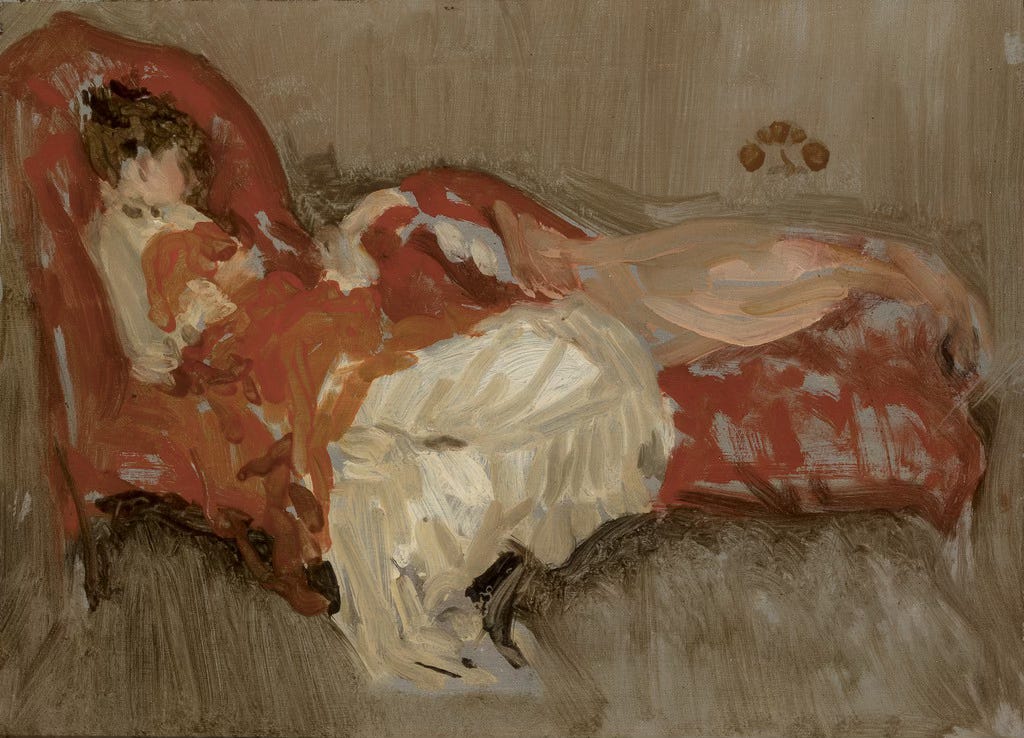
IV. Open Workshops
Thanks to a generous grant from the Lilly Endowment, all workshops are fully funded (sometimes including transportation) for accepted applicants.
Applications close tomorrow (July 15) for Waiting for Words: An Advent Writing Workshop with Lauren Winner Dec 2-6, 2025, at the Saint Francis Springs Prayer Center in Stoneville, NC.
Reading and Writing with Joan Didion, a workshop with Alissa Wilkinson, March 16-22, 2026 in Durham, NC will explore Didion’s craft technique, using her work as inspiration in our own generative writing time. Applications are due Sept. 14.
Writing in the Wilderness: reflecting on the immigration stories that have shaped our lives, led by author and pastor Isaac Villegas, is being offered twice: March 2-7, 2026 in Tucson, and May 15-19, 2026 in Stoneville, NC. This workshop will focus on experiences of migration and the God who wanders with us, and is especially suited for who want to think about their family immigration stories and about how to write those stories as part of their faith, including pastors and community leaders.
Elizabeth Jarrett Andrew, will offer a virtual workshop based on her most recent book The Release: Creativity and Freedom After the Writing is Done, on zoom Monday, September 29, 2025, from 6:00–7:30pm Central Time. This event is free, but registration is required. More info here.